


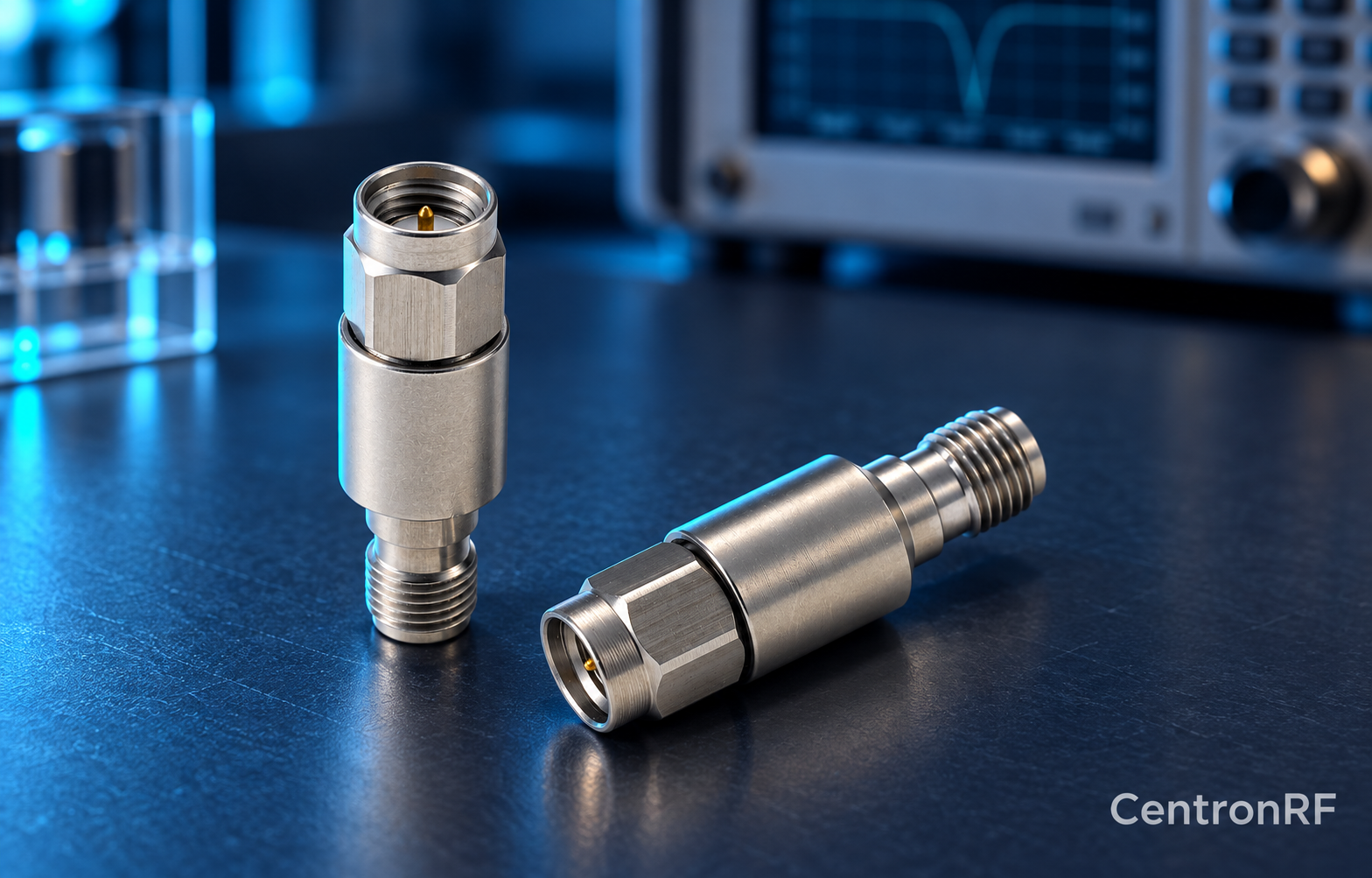
The block's rated voltage must cover the voltage across its blocking structure under the intended conditions. Ask which voltage and test conditions the rating describes.
How it works in practice
DC bias, transients and RF peak voltage can contribute to capacitor stress. Rating conventions may distinguish working voltage from a short test voltage. Confirm conductor arrangement, polarity restrictions if any and environmental derating. Missing voltage data is a reason to request a datasheet before energizing the path.
Example and interpretation
A 24 V supply can generate a startup transient above 24 V, so nominal supply voltage is not the entire requirement.
Checks before use
- Identify steady and transient voltage
- Confirm working-voltage definition
- Include RF stress
- Check environmental conditions
Important limit
A hipot test value is not automatically the allowed continuous operating voltage.
Related Centron RF product
SMA DC block listed for 8 GHz applications. The linked SMA block gives an upper-frequency reference. Confirm its lower passband limit, working voltage, RF power and whether it blocks the inner, outer or both conductors. A catalog range starting with DC should not be interpreted as DC transmission.
Further reading
Mini-Circuits: DC Block Specifications. This background reference explains general principles; the selected Centron RF model’s datasheet governs its own ratings.
Related guides
Educational guide. Numerical examples use the stated assumptions and are not test results for a supplied unit.