


A purchase specification should define range, increments, frequency band, impedance, input ratings and performance limits. Include the required switching conditions.
How it works in practice
State connector genders and mechanical mounting needs, along with attenuation error, baseline insertion loss and VSWR over the band. If repeatability or switching life matters, request those figures explicitly. A catalog title rarely contains every requirement for a controlled test fixture.
Example and interpretation
A requirement of '0–90 dB in 10 dB steps at 2.4 GHz' still needs permitted input power, interfaces and attenuation tolerance.
Checks before use
- Specify range and steps
- State frequency and power
- Define matching and accuracy
- Request missing switching information
Important limit
Do not substitute a nominal range for a complete acceptance specification.
Related Centron RF product
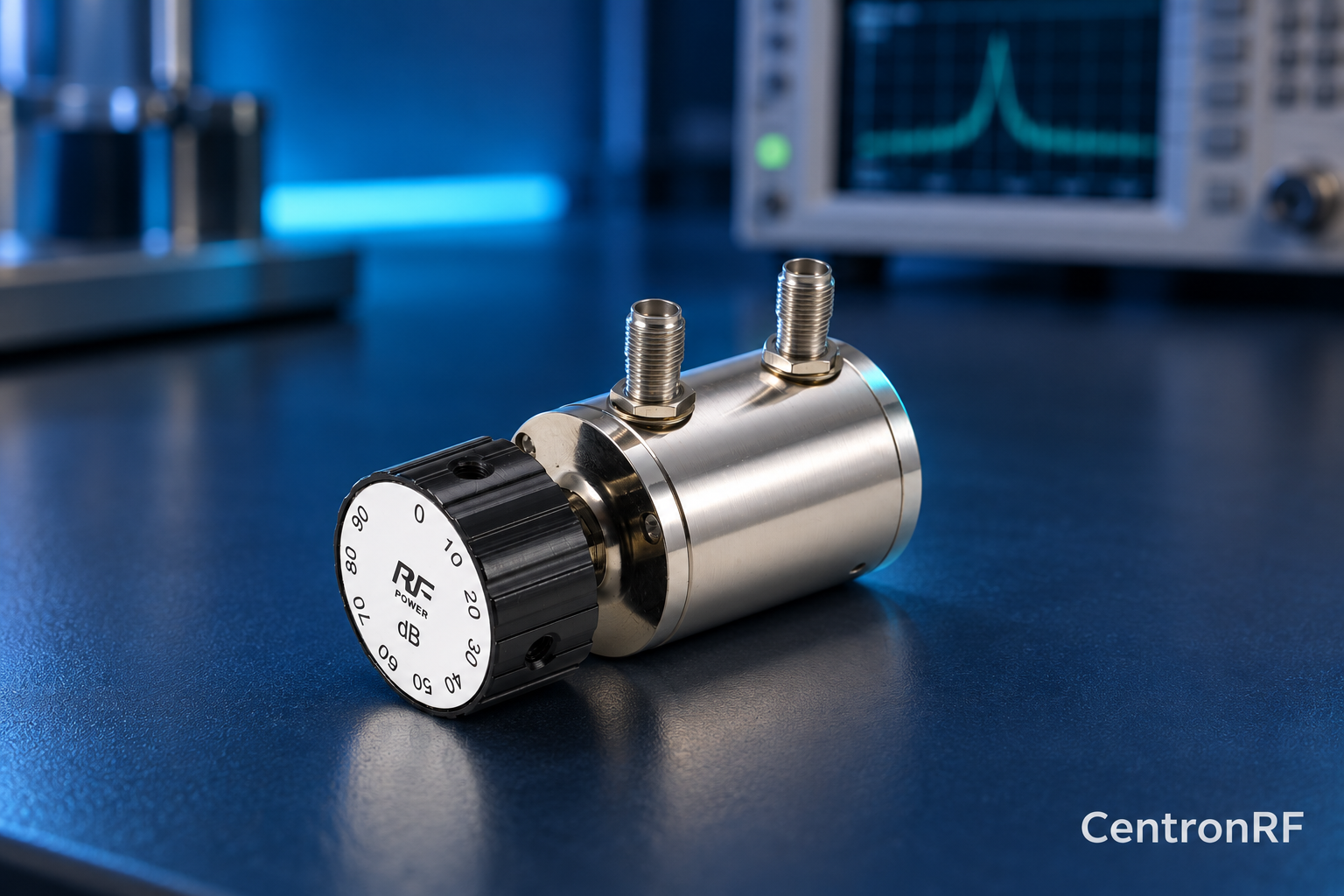
SMA rotary attenuator with 10 dB steps. The linked rotary model lists 0–90 dB adjustment in 10 dB steps, 50-ohm impedance and a DC–6 GHz band. Its listed continuous input is 2 W; obtain explicit switching and pulse limits before applying those stresses.
Further reading
Keysight: Accurate Network Measurements. This background reference explains general principles; the selected Centron RF model’s datasheet governs its own ratings.
Related guides
- Step Attenuator Calibration Records: What to Include
- Choosing a Safe Starting Position for a Rotary Attenuator
Educational guide. Numerical examples use the stated assumptions and are not test results for a supplied unit.