

Category: Knowledge
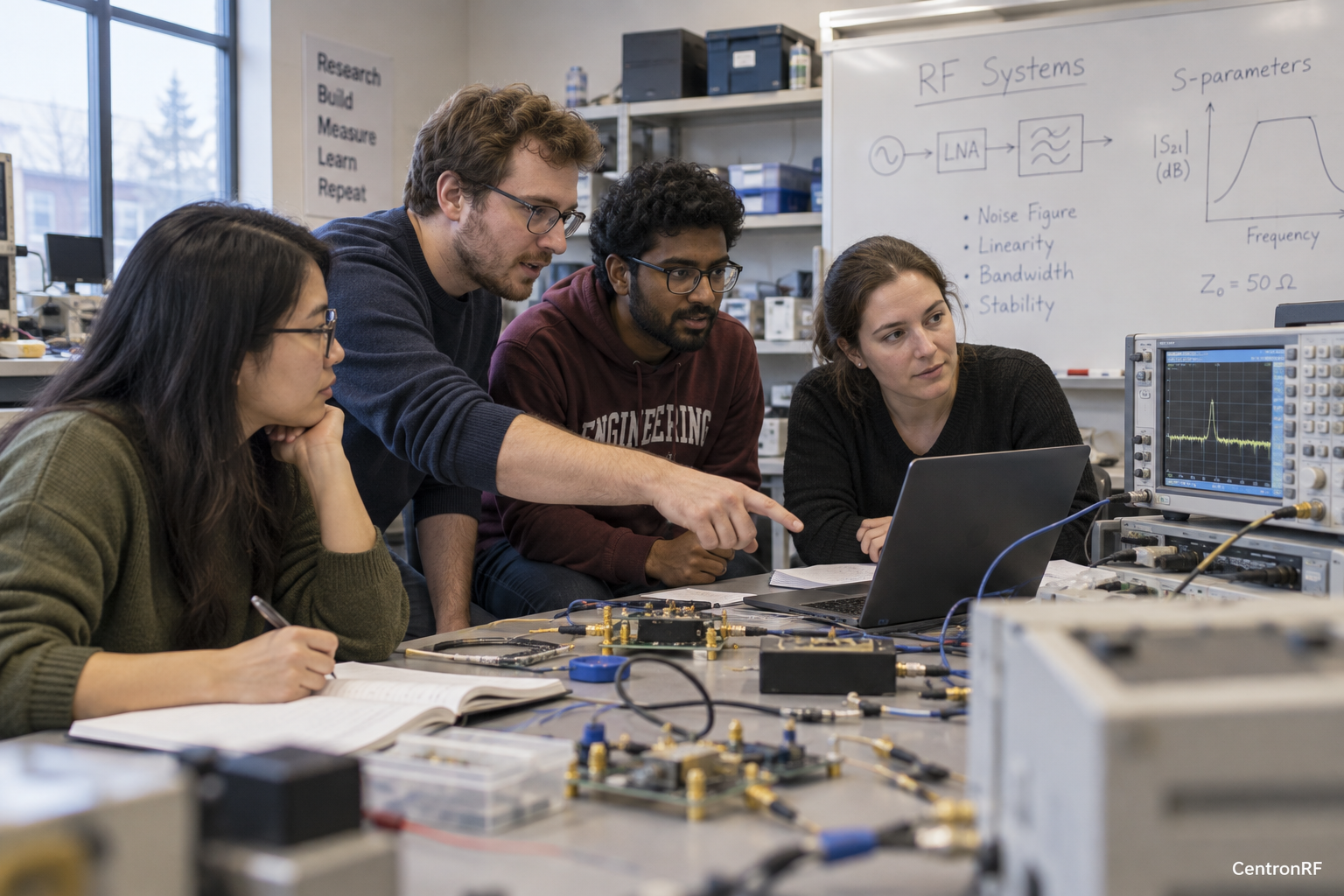
How to Teach dBm and Watts with a Power Measurement
dBm expresses power relative to one milliwatt, while watts state the…
RF Research at Frequencies Above 6 GHz: What to Check
Above-6-GHz research requires accessories whose exact documented frequency range covers every…
How to Demonstrate Instrument Overload Without Exceeding Ratings
An overload-related teaching exercise should use approved instrument settings and controlled…
Planning a Research RF Experiment from the Scientific Question
Plan the experiment’s measurable question, signal route and operating conditions before…
Exploring Static Level Sweeps in RF Prototyping
A manual rotary attenuator can provide selectable loss for controlled laboratory…
What Is a Transfer Standard in RF Laboratory Work?
A transfer standard is a characterized reference used to compare measurements…
How to Document RF Cable and Adapter Changes in Research
Document connection changes because they can alter the route response and…
Why RF Research Results Need Raw Data
Raw data preserves the original observations needed to review corrections, analysis…
How to Explain RF Attenuator Power Dissipation
An ideal matched attenuator dissipates the difference between its input and…
DC Block Demonstrations for RF Students
A DC block demonstration shows how an appropriate component can isolate…